What Ingredients in SPF Can Irritate the Skin and How to Avoid Them
SPF is an important step in skincare. Using sunscreen protects your skin from developing or worsening pigmentation, prevents excessive moisture loss, and protects against photoaging ☀️

6/4/2026
Article content1. Why Does Your Skin React Negatively to SPF?2. What Types of SPF Filters Are There?3. Chemical Filters4. Ingredients in Chemical Filters That May Cause Irritation5. Ingredients to Be Cautious About6. Physical Filters7. Physical or Chemical Filters: Which Is Better?8. Advantages of Next-Generation Chemical Filters:9. How to Choose SPF for Sensitive Skin10. SPF Test for Sensitive Skin11. Conclusion
SPF is an important step in skincare. Using sunscreen protects your skin from developing or worsening pigmentation, prevents excessive moisture loss, and protects against photoaging ☀️
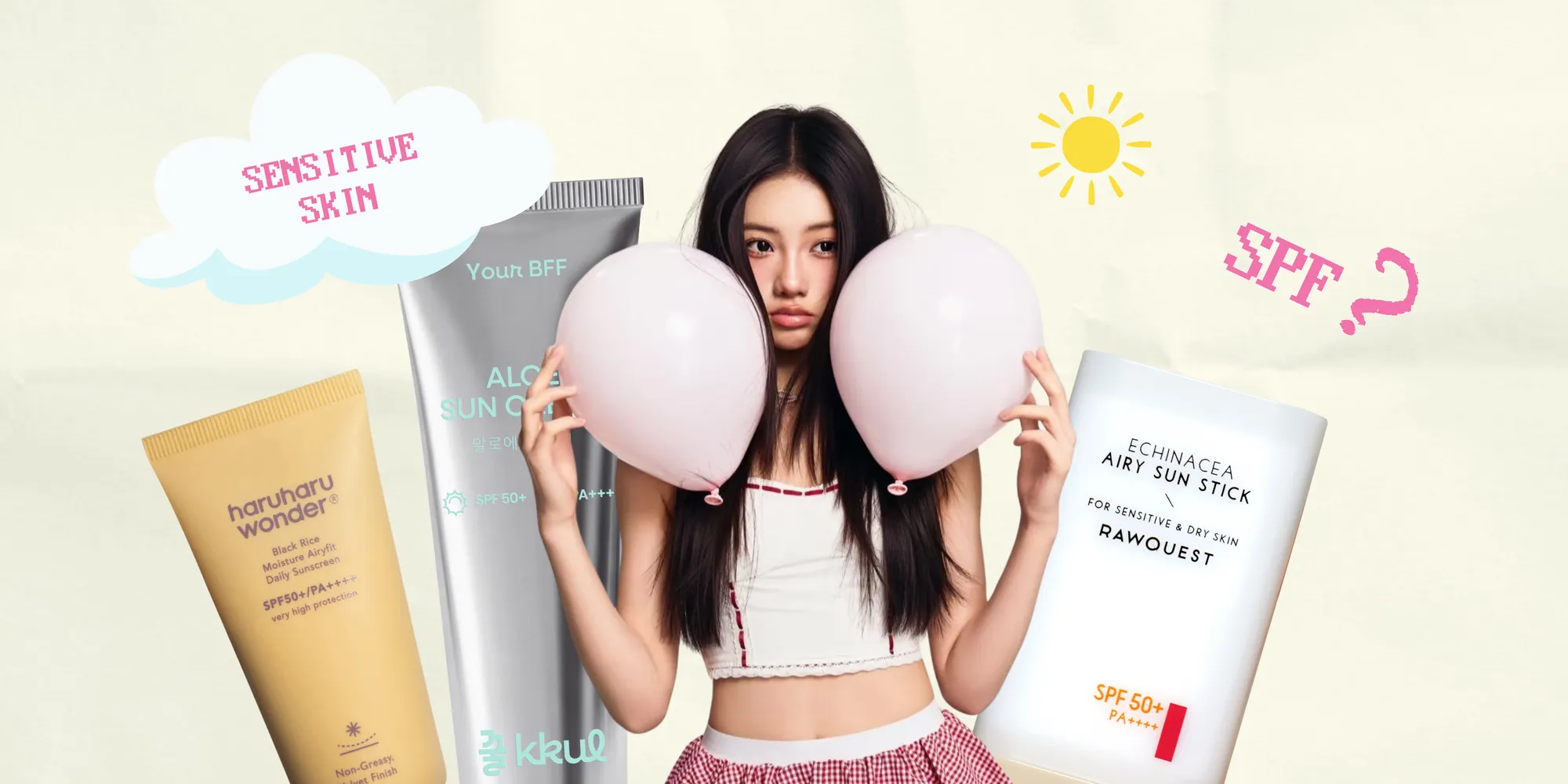
However, choosing a sunscreen, especially for reactive skin, is not always an easy task. Sensitive facial skin may react to certain SPF ingredients, which can cause irritation.
Our girls have prepared information about sunscreen ingredients that should be avoided to prevent side effects and keep your skin looking gorgeous 🥰
Why Does Your Skin React Negatively to SPF?
Sometimes sunscreen products can cause an unpleasant reaction on the skin 😞
The reason for skin burning caused by sunscreen is the presence of ingredients that trigger allergic reactions and irritate the skin, causing redness, itching, and in some cases even peeling.
This can happen not only on sensitive and irritation-prone facial skin. Certain ingredients can cause this reaction, which is why it is worth choosing a product with soothing ingredients, carefully checking the product’s composition, and performing a patch test before fully introducing the product into your daily routine 👌
What Types of SPF Filters Are There?
The following types of filters are used in sunscreen products:
- physical (mineral) filters — create a barrier on the skin and reflect UV rays;
- chemical (organic) filters — absorb UV radiation and convert it into heat;
- combination filters — combine physical and chemical filters for comprehensive protection;
- next-generation chemical filters — more modern filters that are more photostable, more comfortable on the skin, and less likely to cause irritation ☀️
Therefore, when choosing an SPF product, it is important to pay attention not only to the level of protection but also to the type of filters, as they affect skin comfort, the product’s photostability, and the risk of irritation.
Chemical Filters
These are ingredients that absorb ultraviolet rays and convert them into heat, helping to protect the skin from damage.
They are added to SPF products to protect against:
- UVA and UVB rays;
- sunburn;
- photoaging;
- pigmentation;
- excessive moisture loss and dryness 💦
Ingredients in Chemical Filters That May Cause Irritation
- Oxybenzone — one of the common chemical UV filters used in sunscreen products. It can be absorbed by the skin, which is why discussions continue regarding its potential impact on the body.
- Octinoxate — a chemical UV filter that protects the skin from UVB rays. It can also penetrate the skin, which is why its safety is being actively studied.
- Avobenzone — an effective UVA filter that provides protection against rays that contribute to photoaging. However, this ingredient is unstable when exposed to sunlight and often needs to be combined with other filters for improved photostability.
- Octocrylene — a chemical UV filter often used to stabilize avobenzone and enhance sun protection. At the same time, studies show that the ingredient may form benzophenone as it breaks down.
- Homosalate — a chemical UV filter commonly added to SPF products to protect against UVB rays. Discussions regarding the safety of this ingredient are also ongoing, which is why its concentration in formulas is regulated.
- Octisalate — a UV filter that helps enhance sun protection and stabilize other filters in SPF products. In some cases, the ingredient may irritate sensitive skin, which is why its concentration in cosmetic products is also restricted.
Such ingredients are found very rarely in K-beauty products, as they may trigger irritation, allergic reactions, and photosensitivity 🤗
Ingredients to Be Cautious About
In addition to the ingredients mentioned above, there are other sunscreen ingredients that may cause irritation, especially when it comes to sensitive skin:
- heavily fragranced products containing perfume additives;
- alcohol;
- certain preservatives (MI/MCI);
- retinyl palmitate, which may increase the skin’s sensitivity to the sun.
These ingredients can affect skin comfort and trigger unwanted reactions when exposed to heat and sunlight ☀️
Physical Filters
For sensitive or irritation-prone skin, it is better to choose SPF products with physical filters. The formula should contain:
- Zinc Oxide
- Titanium Dioxide
These ingredients create a protective barrier on the skin that helps minimize the impact of UV radiation and provides gentle protection 🕊️
Physical filters protect the skin from both UVA rays, which contribute to photoaging, and UVB rays, which can cause sunburn and pigmentation ☀️
They have a photostable formula, begin working immediately after application, and are well suited for skin after active treatments, such as retinoids, chemical peels, or laser procedures.
SPF Products with Physical Filters:
Combination SPF products can also be a good choice for sensitive skin.
The combination of physical and chemical filters helps provide broad-spectrum protection against UVA and UVB rays while maintaining a comfortable texture without leaving a white cast.
Such formulas are often lighter for everyday use and help combine gentle protection with a pleasant feel on the skin ✨
Combination Sunscreens We Love:
Physical or Chemical Filters: Which Is Better?
Chemical filters effectively absorb UV radiation, while physical filters create a protective barrier on the skin’s surface and block the harmful effects of ultraviolet rays 💛
Advantages of Next-Generation Chemical Filters:
- High photostability. These filters break down more slowly when exposed to UV rays, allowing protection to remain effective for longer.
- Provide better UVA protection to help prevent photoaging, reduce pigmentation, and prevent excessive moisture loss.
- Comfortable texture. Thanks to them, SPF products are lightweight and leave no white cast.
- Lower risk of irritation.
Products containing next-generation chemical filters are generally better tolerated by sensitive skin and do not cause discomfort or unpleasant sensations resulting from the harmful effects of the sun 😊
Next-Generation SPF Products We Love:
How to Choose SPF for Sensitive Skin
With so many SPF products available, it is easy to feel overwhelmed. To choose comfortable and safe sun protection for your skin, pay attention to the following criteria:
- physical filters or next-generation chemical filters in the formula;
- minimal fragrance;
- a simple and gentle formula 🤗
SPF Test for Sensitive Skin
Before fully using an SPF product, we recommend performing a patch test.
Apply the product to a small area of skin and observe the reaction for 48 hours. If no irritation or discomfort appears, the product can be used safely.
One more tip: do not test a new SPF right before a vacation. It is better to test the product in advance at home so you can comfortably observe your skin’s reaction 💆
Conclusion
Sensitive skin requires especially gentle sun protection 💛
That is why, when choosing an SPF product, it is important to pay attention not only to the level of protection but also to the type of filters and the product’s formula.
For reactive skin, SPF products with physical filters or next-generation chemical filters, a minimal amount of fragrance, and a gentle formula are the best choice ✨
And remember: even the best SPF should be tested before full use so that your skin feels comfortable and remains healthy and radiant 🥰
This translation is AI-generated, so there might be some minor slip-ups 😌
Did you like the article?
support the author
14 likes